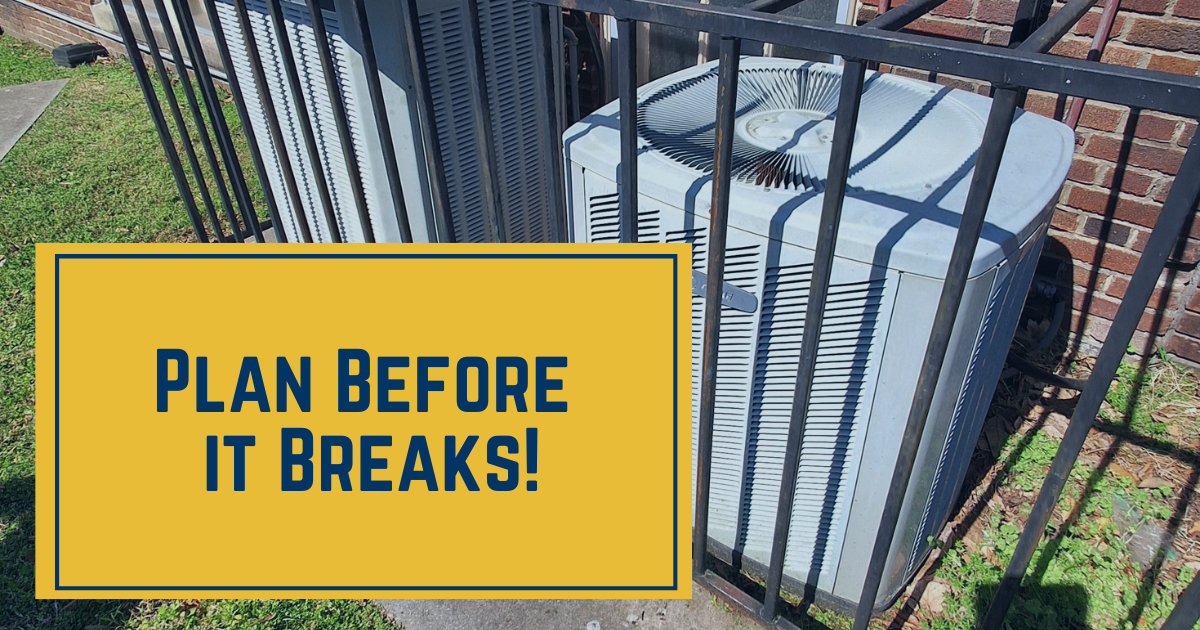
When it comes to caring for your church facility, planning ahead makes all the difference. Every system in your building, like your HVAC, roof, flooring, and lighting, has a lifecycle. That means it has an expected number of years before it needs to be replaced.
The challenge is that many churches wait until something breaks before thinking about replacement. And that’s usually when stress levels rise and budgets get tight. But with a little planning and good recordkeeping, you can stay ahead of those big expenses, avoid emergencies, and keep your church running comfortably year-round.
Every Asset Has a Lifecycle
Think about your HVAC system. A condenser unit might have an average 15-year lifecycle. From the time it’s installed, you can expect about 15 years before it needs to be replaced.
But those are just averages. Not every unit lasts the same amount of time, even if they were installed together. You might have two condensers that are the same make and model, but one sits in the sun all day while the other’s shaded. Or one may be cooling a larger section of the building. Little differences like that add up over time.
That’s why it’s so important to know your assets—not just what you have, but where they are, how old they are, and how they’ve been maintained. That information helps you make better decisions when it comes time to plan for replacements.

Use the Data You Have
Let’s say you’ve got two HVAC condensers that are both 15 years old. One has been reliable until this year but has started running loud and needing expensive repairs. The other has needed a little more maintenance over the years but still runs smoothly.
If you’ve been tracking your maintenance history, you’ll notice that first unit has suddenly become a money pit. That tells you it’s probably nearing the end of its lifecycle. The other one still has life left in it.
Without that information, you might spend money on the wrong unit—or end up having to replace both at once. When you keep up with maintenance records and lifecycle data, you can use facts, not guesswork, to make those decisions.
Budgeting for Replacement
Most churches don’t have unlimited funds to replace equipment whenever they want. That’s why having a Life Cycle Replacement Plan is so helpful.
Start by listing out your major assets. Record their install dates and use standard life expectancies to estimate when each one will need to be replaced. From there, you can start forecasting what expenses are coming in the next five, ten, or even fifteen years.
It’s not about predicting the future perfectly. It’s about being prepared. When you know what’s on the horizon, you can plan ahead, spread out expenses, and make sure you’re not caught off guard when something finally gives out.
Know When It’s Time to Replace
A good rule of thumb to follow: if a repair costs about half as much as a new unit—and the equipment is already past its expected life—it’s usually time to replace it.
Holding on to old equipment might seem cheaper in the short term, but it often ends up costing more in repairs and energy bills. Replacing an old system at the right time means less downtime, fewer surprises, and a more comfortable environment for everyone who walks through your doors.
The Cost of Waiting
Emergency repairs cost more than planned maintenance, but that’s not the only price you pay. There’s also the lost opportunity.
Maybe the air conditioning fails in the middle of a summer service. Or the roof starts leaking during a community event. These situations not only drain your budget—they affect how people experience your church.
We want visitors and members alike to feel welcomed and comfortable, not distracted by a broken system or unsafe space. Planning ahead helps you protect both your facility and the experience of everyone who walks in.
How to Get Started with Lifecycle Replacement Planning
If you don’t have a life cycle replacement plan in place yet, start simple:
- Create an inventory of your major building assets.
- Record make, model, and installation dates for each.
- Track maintenance history—what’s been repaired and when.
- Look up average life cycles and replacement costs.
- Build a simple schedule showing what’s likely to need attention each year.
From there, you can refine it over time. If you work with a professional, they can help you estimate replacement costs with inflation and even forecast a multi-year maintenance budget.
Good Stewardship Starts with a Plan
Lifecycle planning is about stewardship. It’s about being proactive with the resources God has entrusted to your church.
When you plan ahead, you’re avoiding stress and freeing up time and money to focus on ministry. You’re making sure your building supports what happens inside it.
So take the first step. Start building your inventory, track your maintenance, and get your replacement plan in motion. Your future self—and your congregation—will be glad you did.
Foundational Facility Management Consulting helps churches create customized facility management plans, assessments, and replacement schedules to stay ahead of maintenance issues. Take our free Church Facility Management quiz to see how your church is doing.