One of the most common things I hear from churches is, “We want to get ahead of facility issues, but we don’t even know where to start.” If your team has ever felt overwhelmed by constant repairs, surprise expenses, or the sense that the building is always one step ahead of you, you are not alone.
A big part of that stress comes from one simple problem. Many organizations, including churches, don’t know what facility assets they have in their building.
Without that list, everything else becomes guesswork. Preventive maintenance, budgeting, planning for replacement costs, and even communicating needs to leadership all depend on knowing what is in your building and what condition it is in.
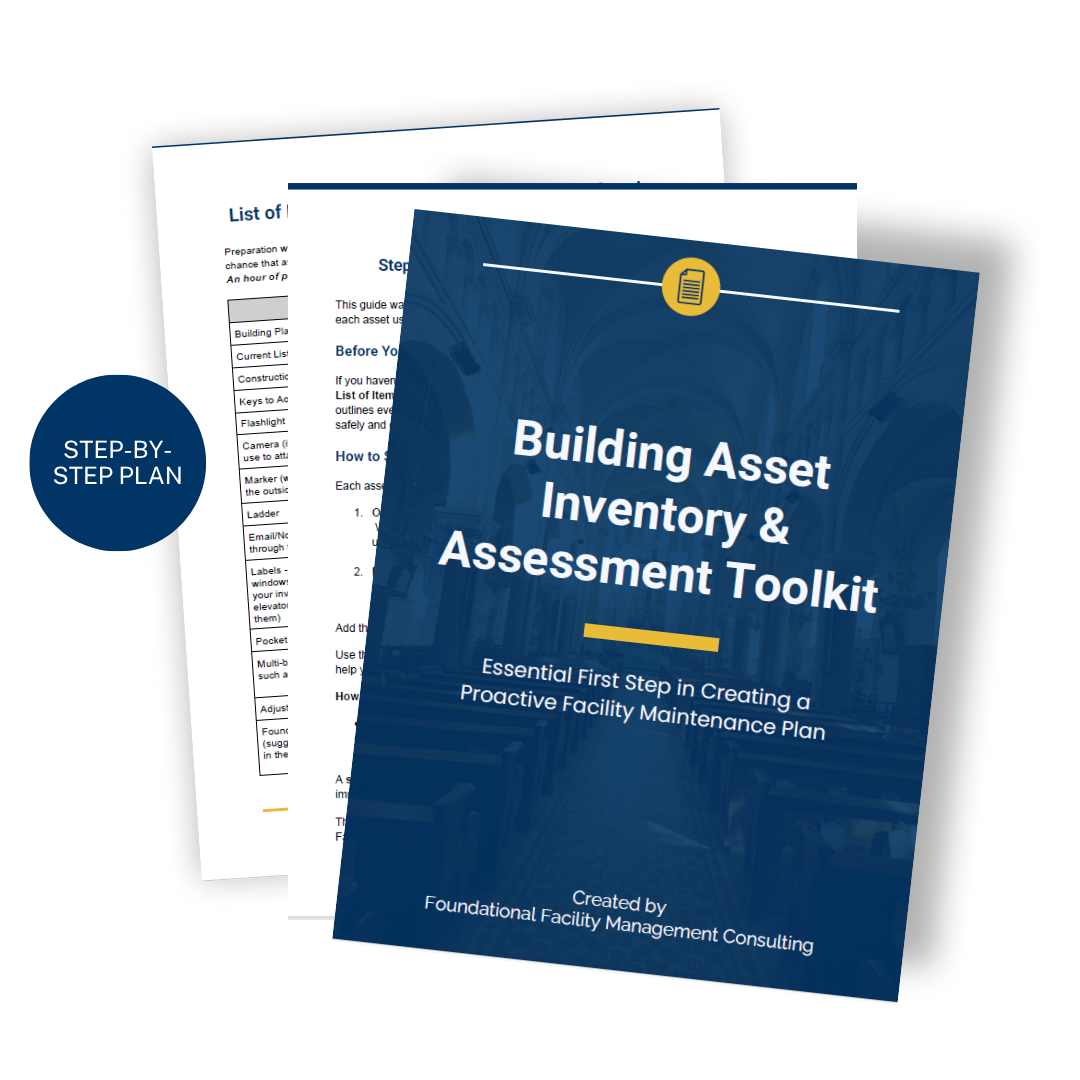
That is why we are excited to share that the Building Asset Inventory and Assessment Template Bundle is now available in the FFMC Store.
This toolkit gives your church a clear, step-by-step process to identify, document, and evaluate every major building asset so you can finally move from reacting to planning.
Why Most Churches Struggle With Asset Information
One thing I’ve noticed in many churches and organizations I’ve worked with is that the building isn’t the real problem. The real problem is that no one has had the time, structure, or support to put all the information in one place.
When your days are full of ministry needs, events, and the general “Sunday-to-Sunday” rhythm, it starts to seem almost impossible to pause long enough to document what is actually in your facility. Over time, gaps form, small details get missed, and eventually the team is left guessing about the age or condition of some of the most important assets in the building.
Here are a few patterns that show up again and again:
- Maintenance knowledge often lives inside one person’s head instead of in a shared system.
- Volunteers want to help, but they do not always know where to find the information they need.
- Assets get replaced, upgraded, or repaired, but the old list never gets updated.
- Leadership wants to create realistic budgets, but they do not have accurate information to plan from.
- Staff and volunteers are constantly pulled toward immediate ministry needs, so documentation gets pushed to the bottom of the list.
None of this happens because the church doesn’t care. It happens because churches are busy places filled with people who are doing their best to focus on ministry. Without a consistent, repeatable process, it’s easy for facilities information to get scattered, outdated, or lost. The good news is that this toolkit finally gives you that clear process so your team can gather information with confidence and begin building a maintenance plan that actually works.
Why an Asset Inventory Reduces Stress and Saves Money
When your team completes the inventory and assessment, you gain three major advantages that immediately reduce your stress level.
1. You can plan your maintenance instead of waiting for problems.
Once you know the age and condition of each asset, preventive maintenance becomes simpler. You can schedule work orders, train volunteers, and catch issues early.
2. You can build a realistic and responsible budget.
Unexpected failures are expensive. An asset inventory helps you plan ahead for large costs like roofs, HVAC units, and water heaters. Instead of pulling from your general budget at the worst possible time, you can prepare for these expenses over time.
3. You can speak confidently to leadership about facility needs.
It is much easier to get support for repairs or replacements when you have clear information, photos, ages, and condition ratings. Leaders want to make wise decisions, and this information helps them do that.
This information strengthens stewardship and gives the church confidence that the facility is being cared for in a thoughtful, strategic way.
Before We Look at What Is Included
Now that you understand why an asset inventory is so important, it helps to think about what this actually changes for your daily work. When you gather accurate information and see all your building assets in one place, you finally have a realistic picture of where your building stands today.
You know which areas need attention, what should be monitored, and what’s in great shape. You also have a clear starting point for building a preventive maintenance plan and planning your budget. These changes will also help reduce those stressful last-minute emergencies that pull your focus away from ministry.
This is the moment when facility care starts to feel manageable again. Instead of dealing with one crisis at a time, you can begin to build a roadmap. And for many churches, this is the first time that maintaining the building begins to feel organized instead of overwhelming.
What Comes in the Bundle
This facility asset template bundle and guide includes everything you need to complete both your asset inventory and your asset condition assessment.
Getting Started
01 – Overview of Your Building Component Asset Inventory
02 – Why Accurate Building Asset Inventories Matter
03 – List of Items Needed to Inventory Assets
Asset Inventory and Assessment
04 – Asset Inventory Step-by-Step Guide
05 – Facility Asset and System Assessment Step-by-Step Guide
06 – Asset and System Assessment Grading Chart
07 – Lifecycle Averages and Assessment Grades Spreadsheet
08A – Instructions for Using the Asset Inventory and Assessment Template
08B – Asset Inventory and Assessment Spreadsheet Template
Using and Maintaining Your Inventory
09 – Where Should I Keep My Facility Asset Information?
Whether your team prefers paper or digital tools, everything is included.
Who are the Guide and Templates Designed For
This guide and template bundle was created with real churches in mind. Whether you have a full-time facility manager or rely heavily on volunteers, this resource meets you where you are.
Many churches are working with aging buildings, limited staff availability, and tight budgets. Others are trying to make sense of years of scattered notes, outdated spreadsheets, or incomplete lists. This Asset Inventory and Assessments template bundle helps churches get clarity so they can move forward with confidence.
You will benefit from this toolkit if your church is facing recurring emergency repairs, trying to build a preventive maintenance plan, or preparing for future budget seasons. It’s also helpful for churches that want to improve long-term stewardship of their buildings but don’t know how to begin. If you have ever felt like you can’t get ahead, this bundle gives you the foundation you need to finally take control instead of letting the building control your time.
A Quick Note About Software
Some churches worry that spreadsheets and templates might feel too simple or outdated compared to using a CMMS. The truth is that these tools were intentionally designed to work for any church, no matter where you are in your facility management journey.
If you already have a CMMS, this toolkit gives you the accurate information you need to put into that system. A CMMS is only as strong as the data it holds, and this process makes sure the data going in is complete and correct.
If you aren’t ready for a CMMS yet, this toolkit gives you everything you need to get started. Many churches still rely on paper, shared drives, or programs like Asana or Trello to organize their work. This toolkit will work with all of those and will help you gather information in a structured way so you can enter it wherever you keep your facility records.
The software is never the answer on its own. It’s simply a tool. What makes the biggest difference is having an accurate list of your assets and a repeatable process to keep it updated. This toolkit gives you the foundation you need to succeed with or without a software system.
Take Your First Step Toward a More Organized Facility Plan
If you’ve been wanting to get ahead of the repairs, the surprises, and the stress of reactive maintenance, this is where you start. Once your team knows what assets you have and their condition, everything else becomes clearer.
You can finally build the preventive maintenance schedule you have been wanting. You can plan your budget with confidence. And you can communicate well about the building and maintenance with leadership and volunteers.
The Building Asset Inventory and Assessment Template Bundle is available now in the FFMC Store for $149, and you can begin using it this week.
If you would like help or want someone to walk you through the process, schedule a call to discuss your church’s needs.
Your building is a ministry tool. Taking care of it is another way you care for your congregation and community. We are here to help however we can.